



Original platform
G Sport Tyres B2B eCommerce Platform
Australia
Wholesale tyre distribution
A B2B tyre eCommerce platform developed to support retailer accounts, product catalogues, bulk ordering, checkout, payments and order administration.
Discuss Your Project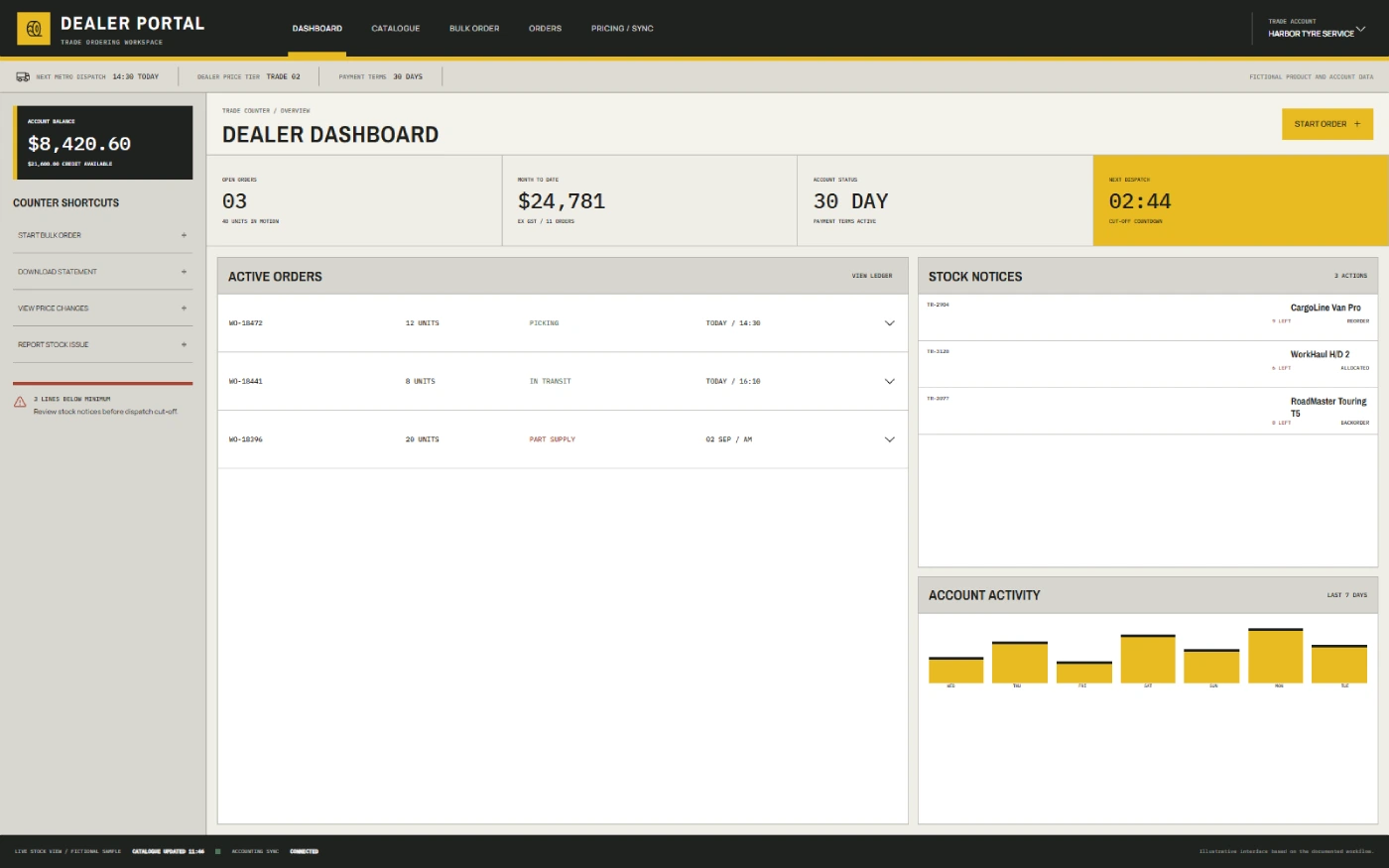
Magento platformOriginal B2B eCommerce phase
Retailer accountsBusiness buyer access
Bulk orderingCatalogue through checkout
MYOB integrationPart of the original scope
G Sport Tyres
Automotive tyre distribution
B2B eCommerce and Dealer Ordering Platform
Completed project with a later documented support phase
- Project type
- B2B eCommerce and dealer ordering platform
- Market
- Australia
- Original platform
- Magento B2B eCommerce
- Later support evidence
- Application maintenance documented in 2020
The Client Relationship
One relationship, two documented phases
Softlabs Group worked for Humanbot Pty Ltd, the contracting client, on a platform for the end client, G Sport Tyres Pty Ltd.
G Sport Tyres operates in the automotive tyre distribution sector in Australia. The project focused on a business-to-business ordering experience for manufacturers, retailers and platform administrators.
The relationship is documented in two phases: the original Magento B2B eCommerce platform project, and a later application maintenance and support phase, with direct evidence from 2020.
These phases belong to one project relationship, but their technologies and documented activities are presented separately. The available evidence does not establish how the two technical environments were connected.
Documented in 2020
Application maintenance and support
Documented Need
A structured wholesale ordering workflow
The source material does not describe a detailed initial business problem or provide measurable targets. This case study therefore focuses on the documented platform capabilities.
Business purchasing
Manufacturers and retailers needed to work with product catalogues, place bulk orders and complete purchasing workflows.
Administration
The platform needed functions for orders, invoices, vendors and pricing.
Connected operations
MYOB accounting integration and analytics integrations formed part of the original scope.
What Was Built
A Magento-based B2B platform
The original project was a Magento-based B2B eCommerce platform for G Sport Tyres.
Together, its functions supported a structured tyre dealer ordering platform, from catalogue browsing and order preparation to checkout and administrative order handling.
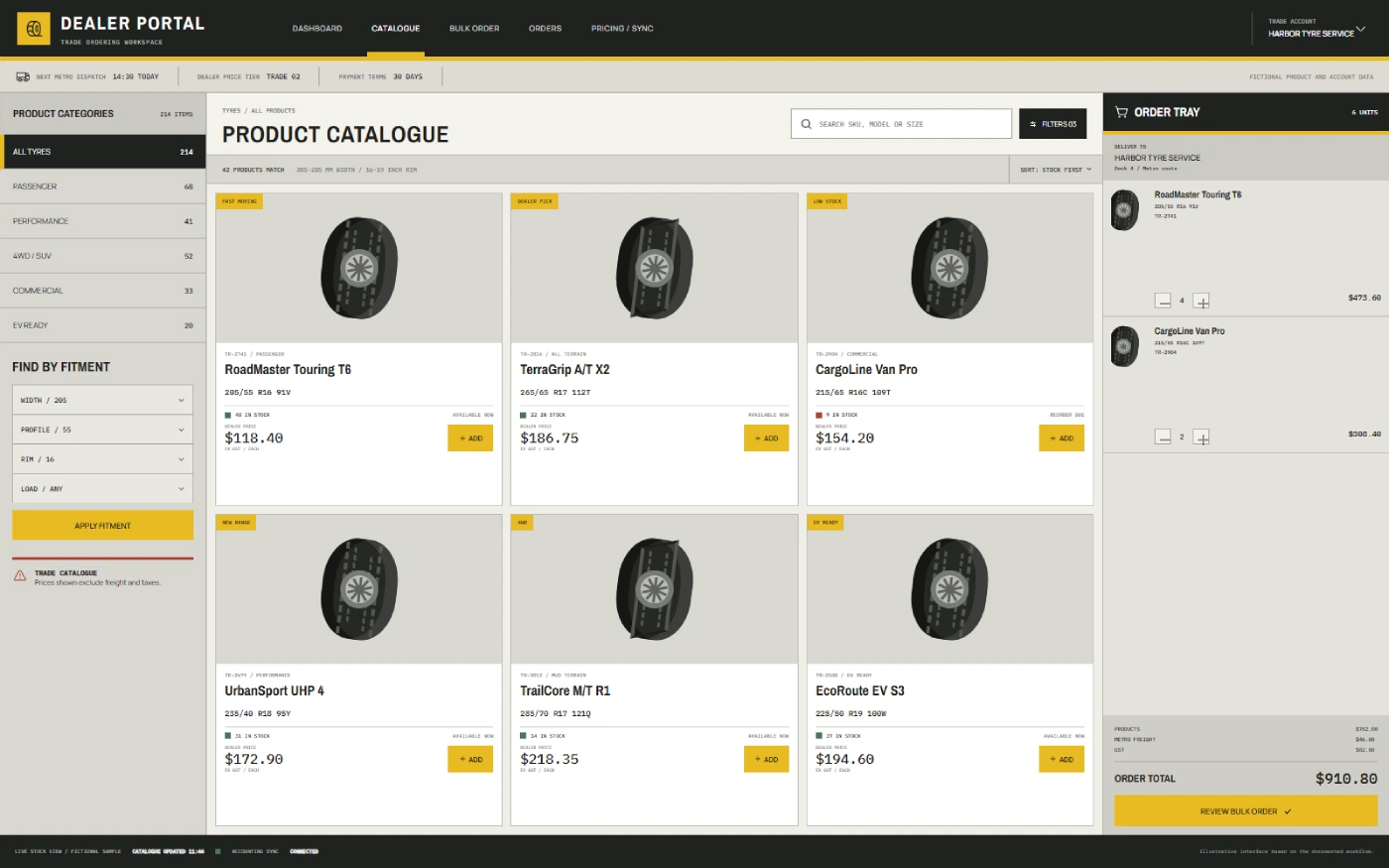
- Catalogues and product categories
- Retailer account functionality
- Bulk ordering, cart and checkout
- Payment processing
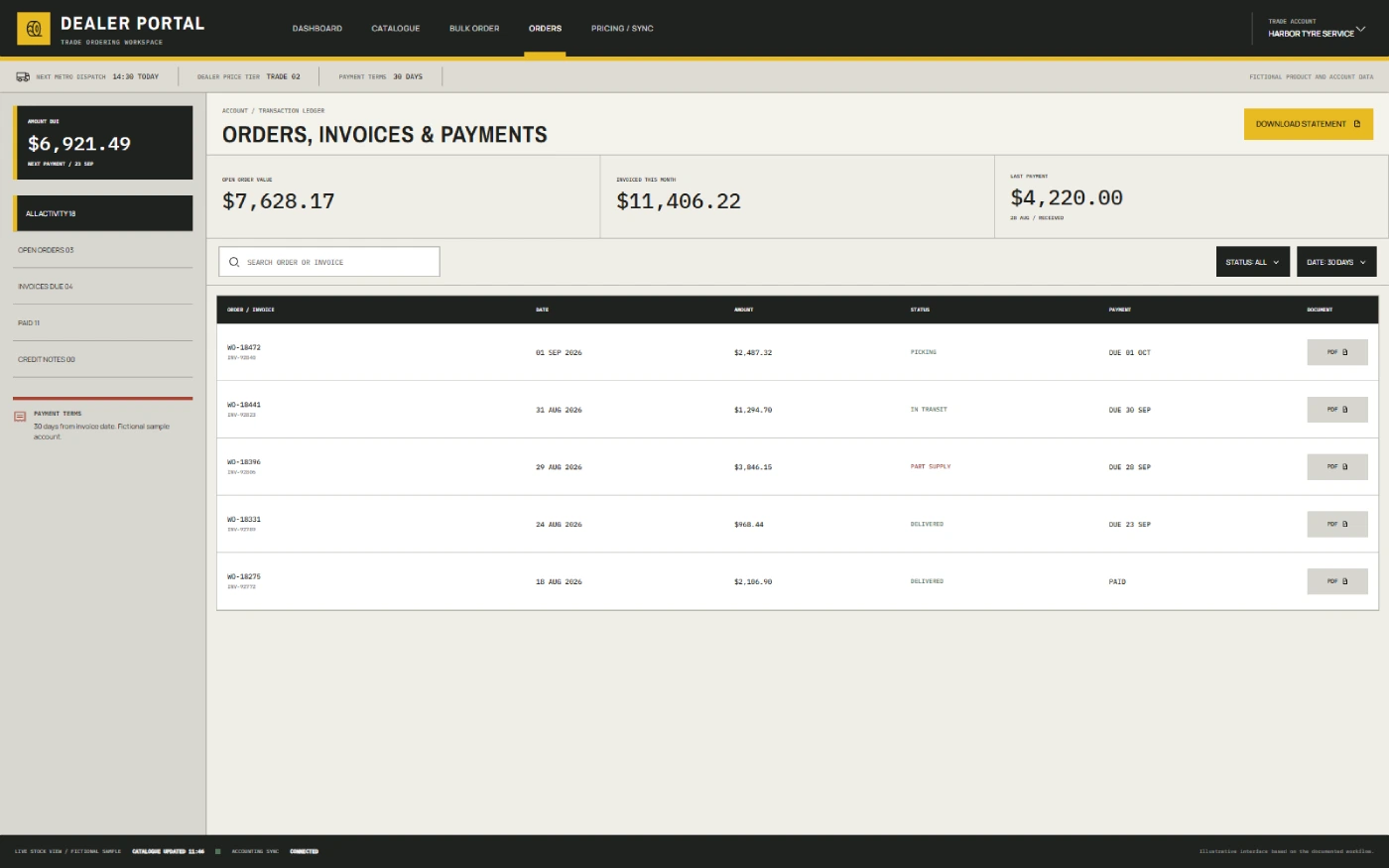
- Order management and invoicing
- Vendor and pricing management
- MYOB and analytics integrations
- Admin and super-admin controls
Buyer Workflow
From retailer access to order follow-up
Four clear steps connect catalogue discovery, bulk ordering and administrative handling.
Step 01
of 04
Access a retailer account
Access a retailer account
A retailer uses its account to enter the B2B ordering platform and access the available purchasing workflow.
Browse catalogues and categories
The retailer moves through the tyre catalogue and product categories to identify products for an order.
Prepare a bulk order
Products and quantities are added to a bulk order before the buyer reviews the cart.
Complete checkout and follow the order
The retailer continues through checkout and payment. The resulting order can then move into the platform’s documented order management and invoicing functions.
Dealer Ordering Workflow
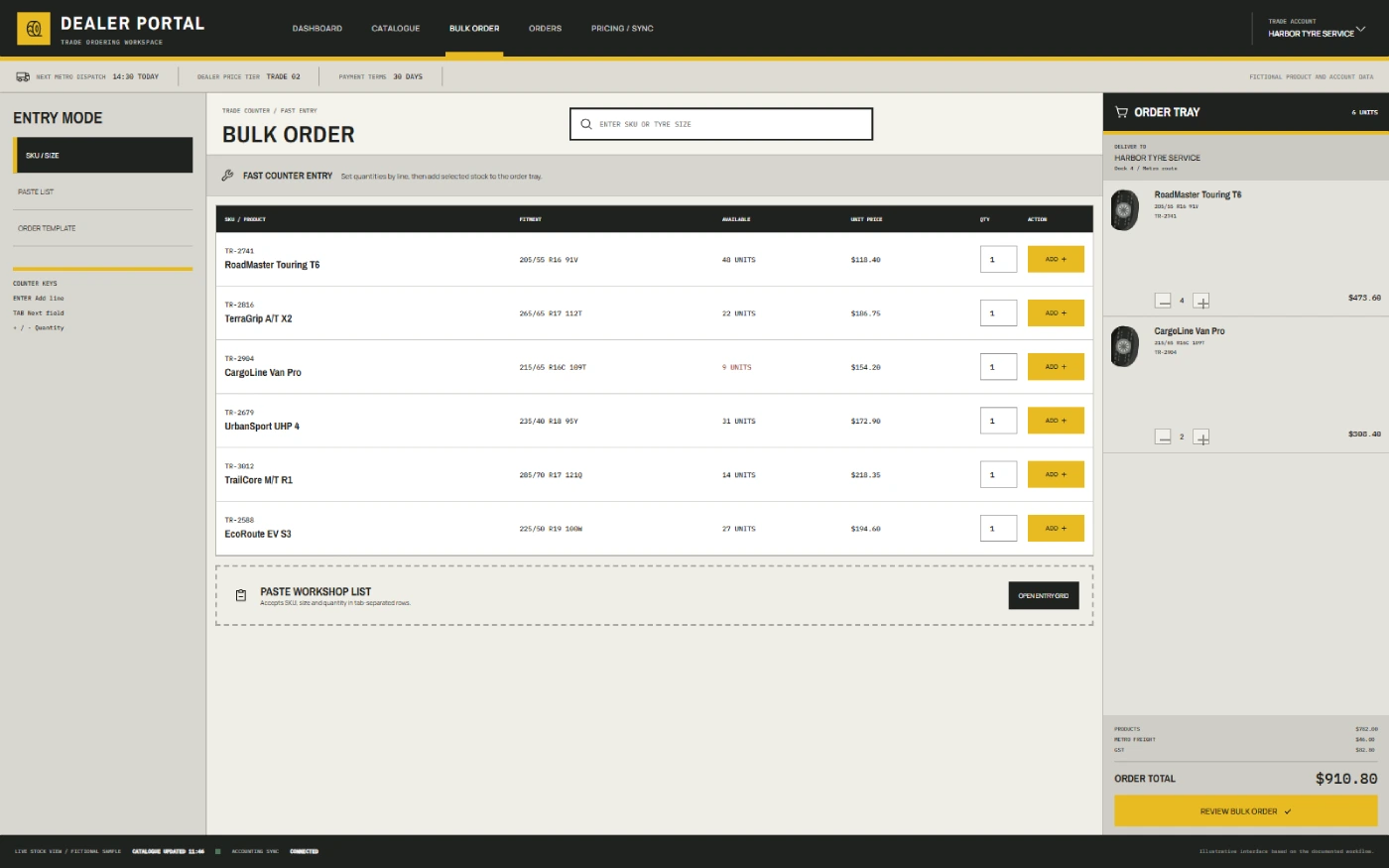
Bulk ordering, made easy to review
The bulk-order interface represents the documented path for selecting tyre products, entering quantities and preparing an order for cart and checkout.
The image is a recreated visual based on the confirmed project scope. It is not an authentic screenshot of the original platform and does not represent live client data.
Platform Capabilities
Designed for both buyers and administrators
Catalogue organisation
Product catalogues and categories gave the platform a structured way to present tyres for B2B ordering.
Retailer account management
Retailer account functionality supported participation by business buyers within the ordering platform.
Bulk ordering and checkout
The system included bulk ordering, a cart, checkout and payment functions for wholesale purchasing.
Order management and invoicing
Administrative users could work with orders and invoices after an order was placed.
Vendor and pricing management
The platform included controls for vendor information and pricing management. The evidence confirms pricing management, but it does not establish dealer-specific pricing or discount rules.
Accounting and analytics integrations
The original scope included integration with MYOB accounting software and analytics services.
Administration controls
Admin and super-admin controls supported higher-level platform management.
Evidence Boundary
One project relationship. Two documented phases.
Original B2B eCommerce platform
Magento platform scope
The original confirmed scope describes a Magento B2B eCommerce platform with catalogue, account, bulk-ordering, checkout, payment, order, invoice, vendor, pricing, MYOB integration, analytics and administration functions.
Later application maintenance and support
Direct evidence dated 2020
This phase included coding, domain-knowledge continuity, uptime maintenance, bug fixes, tweaks, error resolution and minor UI, UX or rendering changes. Major functionality was treated as separate change-request work.
The support evidence names PHP-Laravel and Microsoft SQL Server 2016. It does not say whether the original Magento platform was migrated, replaced, connected to or operated alongside that environment.
Ongoing Platform Support
Maintaining and refining the existing application
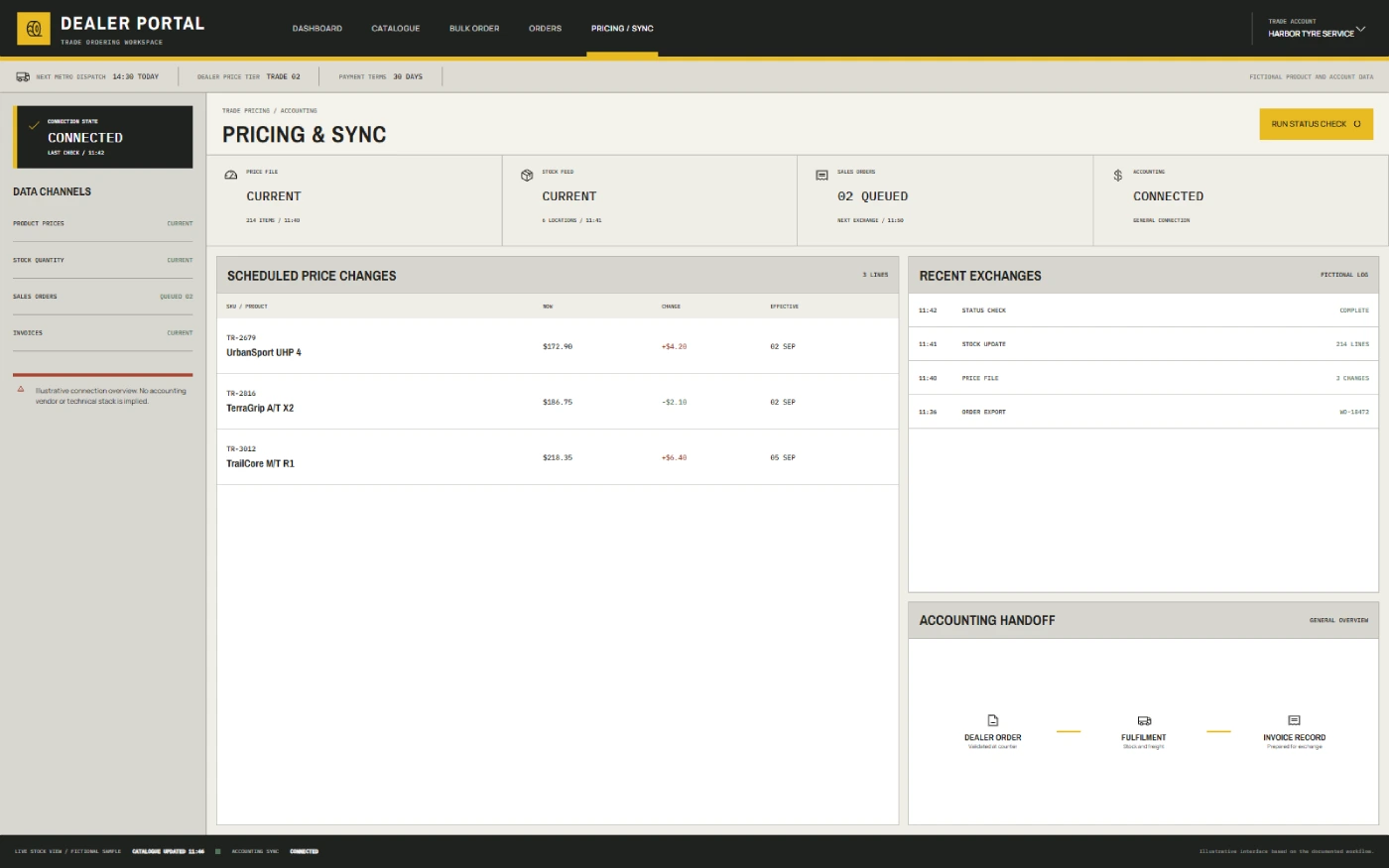
A later phase of the relationship focused on maintaining and making minor changes to the existing Gsports application.
- Coding for minor application changes
- Continuity of platform and business-domain knowledge
- Uptime maintenance
- Bug fixes and functional tweaks
- Investigation and resolution of errors
- Minor UI and UX changes
- Correction of rendering issues
Requests for major functionality were handled separately as change requests.
Core Features
Wholesale ordering from catalogue to administration
The feature set connects buyer-facing commerce with the controls needed to handle submitted orders and the documented support phase.
Product catalogues and categories
Organised tyre products into catalogue and category structures for business buyers.
Retailer accounts
Provided account functionality for retailers using the B2B platform.
Bulk tyre ordering
Allowed buyers to prepare orders containing multiple tyre products and quantities.
Cart, checkout and payments
Supported the purchasing path from selected products through payment.
Order management
Provided administrative functions for managing submitted orders.
Invoicing
Included invoicing as part of the documented order administration scope.
Vendor management
Supported the management of vendor information within the platform.
Pricing management
Provided controls for managing pricing without claiming unverified dealer-specific rules.
Admin and super-admin controls
Provided separate administration capabilities for platform management.
MYOB integration
Connected the original Magento project scope with MYOB accounting functions.
Analytics integrations
Included integrations for platform analytics.
Maintenance and minor changes
The later support phase covered coding, bug fixes, minor changes and error resolution.
Also Fits
Where this platform pattern could fit
The documented capabilities are relevant to organisations connecting catalogue-led buying with business accounts and operational handoff.
01
Wholesale tyre ordering software
Structured catalogues, retailer access and bulk purchasing.
02
B2B dealer portal development
Business accounts, carts, checkout and administration.
03
MYOB eCommerce integration
Accounting connection within the documented original platform scope.
04
Wholesale pricing management
Pricing controls without unverified dealer-specific rules.
Technologies by Project Phase
Technical evidence, kept in context
Original Magento B2B Platform
Magento
MYOB accounting integration
Analytics integrations
Later Application Support Phase
HTML5
CSS3
JavaScript
PHP-Laravel
Microsoft SQL Server 2016
HTML reporting
Crystal Reports
These lists come from different documented phases and are not presented as one architecture or a migration path.
Build Around Your Buying Process
Planning a B2B Ordering Platform?
We develop B2B eCommerce and dealer ordering platforms around documented catalogue, account, ordering, payment, administration and integration requirements.
Discuss Your ProjectFrequently Asked Questions
G Sport Tyres project details
What is a B2B tyre eCommerce platform?
A B2B tyre eCommerce platform is an online system designed for business purchasing rather than general consumer shopping. In this project, the documented functions included retailer accounts, tyre catalogues, bulk ordering, checkout, payments, order management and invoicing.
What was included in the G Sport Tyres platform?
The original Magento project included catalogues and categories, retailer accounts, bulk ordering, cart and checkout, payments, order management, invoicing, vendor and pricing management, MYOB accounting integration, analytics integrations, and admin and super-admin controls.
Did the platform support bulk tyre ordering?
Yes. Bulk ordering was part of the confirmed project scope. Retailers could use the platform’s catalogue and ordering workflow to prepare orders containing multiple products and quantities before moving to cart and checkout.
Was MYOB integrated with the eCommerce platform?
MYOB accounting integration formed part of the original Magento B2B platform scope. The available evidence does not provide enough detail to describe the exact data flows, synchronisation frequency or accounting configuration.
What support was provided after the original build?
A later support phase documented in 2020 covered minor changes, coding, domain knowledge continuity, uptime maintenance, bug fixes, tweaks, error resolution, minor UI/UX changes and rendering corrections. Major functionality was handled separately as change-request work.
Was the Magento platform migrated to Laravel and Microsoft SQL Server?
The available evidence does not establish that. Magento and MYOB belong to the documented original platform phase, while PHP-Laravel and Microsoft SQL Server 2016 are named in the later support evidence. The records do not say whether these systems replaced, connected to or coexisted with one another.


