India
India  Mongolia
  Sweden
  Australia
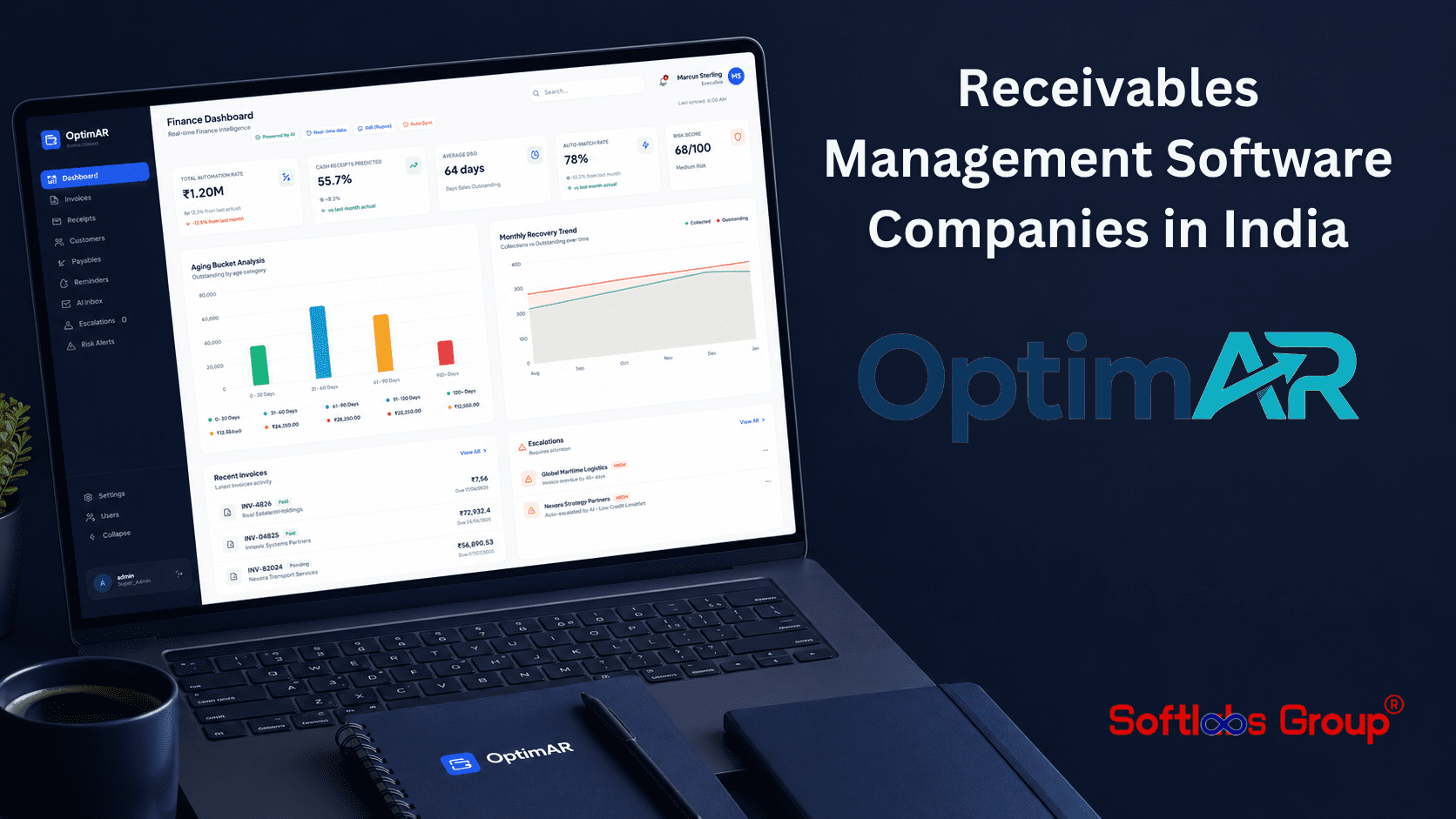
Your finance team spends hours every week chasing overdue invoices. Customers delay. DSO climbs. Most Indian businesses still run this on spreadsheets and manual calls, which is exactly the gap that receivables management software companies in India now fill.
Indian B2B firms carry some of the longest payment cycles in the world, and adoption of receivables management software, also called accounts receivable software or AR automation software, is rising fast in India as a result. CredFlow alone reports more than 2,00,000 active Indian SME businesses using its receivables tools, and most of that growth sits on top of Tally. The need cuts across sectors, from manufacturers, distributors, and wholesalers to consulting and professional services firms that bill on credit. The shift from invoicing to actual collection is now underway.
This list of receivables management software companies in India covers six verified platforms, checked for India presence, real AR management features, and sourced evidence. OptimAR leads the list, followed by five platforms built or proven for Indian finance teams. Each entry stays honest about what the tool actually does.
Quick Answer: The top receivables management software companies in India include OptimAR, Kapittx, TanServ/Inebura, Recordent, Growfin, and CredFlow. Each was checked for India HQ or founding, real accounts receivable management features such as AR aging and DSO tracking, and sourced proof.
Key Takeaways
- Receivables management software is not the same as accounting software. Tally, Zoho Books, and Vyapar create invoices; receivables management software ages, follows up on, and collects them.
- The six leading receivables management software companies in India are OptimAR, Kapittx, TanServ/Inebura, Recordent, Growfin, and CredFlow.
- OptimAR, built in Mumbai by Ainfinite AI (Softlabs Group), is the AI-led pick, combining AR aging, customer risk scoring, and automated follow-up in one copilot.
- Tally alone cannot manage receivables. Its bill-wise outstanding report shows what is due but does not automate AR aging, dunning, Promise-to-Pay, or risk scoring.
- Under the MSME Act’s 45-day payment rule, late B2B payment carries a real cost, which is why dedicated AR aging and overdue visibility now matter for Indian finance teams.
Here is a quick view of the best receivables management software companies in India, matched to common use cases:
- Best AI-led AR copilot: OptimAR, for AR aging, risk scoring, and automated collections in one platform.
- Best for Tally-based MSMEs: CredFlow, which layers receivables on top of Tally and Busy.
- Best enterprise managed AR: TanServ/Inebura, with 12+ years and 80+ Fortune 500 India clients.
- Best for collections plus credit checks: Recordent, which pairs AR with a B2B credit registry.
- Best deep AR visibility: Growfin, with AR aging, DSO, and payment health scoring.
- Best lean invoice-to-cash automation: Kapittx, an India-founded pure-play AR platform.
- Why Indian B2B finance teams need receivables management software
- The 6 receivables management software companies in India
- Quick comparison table
- How to choose the right software
- What is happening in India right now
- What to expect during implementation
- What it costs for Indian businesses
- Key receivables management terms explained
- Frequently asked questions
Why Do Indian B2B Finance Teams Need Receivables Management Software?
Because accounting tools record invoices, but they do not chase, age, or recover them. That is the job receivables management software does.
Most Indian finance teams already use Tally, Zoho Books, or Vyapar to raise GST invoices. These tools create the bill and post it to the ledger. They do not track which customer is 60 days overdue, score payment risk, or run follow-up workflows. As outstanding balances grow, the gap between billing and collection becomes a cash flow problem.
Receivables management software vs accounting software
The two solve different problems. Accounting software handles invoice creation and compliance. Dedicated Accounts Receivable Software handles what happens after the invoice goes out: aging, follow-up, and recovery. The table below makes the split clear.
| Dimension | Invoicing / Accounting Software | Receivables Management Software |
|---|---|---|
| What it does | Creates invoices, records transactions | Tracks, ages, follows up, and collects on outstanding invoices |
| India examples | Tally, Zoho Books, Vyapar, QuickBooks | OptimAR, Kapittx, TanServ/Inebura, Growfin |
| Key features | GST invoicing, ledger, balance sheet | AR aging, dunning, DSO tracking, risk scoring, Promise-to-Pay |
| Who uses it | Finance team for bookkeeping | AR Manager, Collections team, CFO |
| Solves | Invoice creation and accounting compliance | Payment follow-up, overdue recovery, cash flow visibility |
Can Tally handle receivables management?
Tally can show a bill-wise outstanding report, but it cannot manage receivables on its own. The report tells you what is due. It does not age receivables into buckets automatically, run dunning workflows, track Promise-to-Pay, or score customer risk. For real recovery, Indian teams pair Tally with dedicated receivables management software that adds these layers on top.
There is also a compliance angle. Under the MSME Act’s 45-day payment rule, registered micro and small suppliers must be paid within a set window, which raises the cost of late settlement. Strong AR aging visibility helps you spot and act on slipping accounts before they breach that limit. Reliable cash flow visibility from AR also protects working capital across the invoice-to-cash cycle.
The 6 Receivables Management Software Companies in India
How we evaluated these companies: We included only platforms with a genuine India presence (headquartered, founded, or actively serving Indian B2B teams). Each had to offer real receivables management features such as AR aging, dunning, DSO tracking, or risk scoring, rather than only invoicing. We verified positioning against public sources including company sites, Tracxn, PitchBook, and MCA filings, and we note caveats openly where a company is US-registered or service-led. Employee figures are approximate and drawn from public databases. Every entry below is one of the receivables management software companies in India that passed these checks.
Here are six platforms, starting with OptimAR. Each one was checked against the research criteria above, with honest notes where a company has a caveat.

1. OptimAR by Ainfinite AI (Softlabs Group)
OptimAR is an AI-powered accounts receivable and collections copilot built by Ainfinite AI, the AI engineering arm of Softlabs Group. It gives finance teams a single command center for every outstanding invoice. Instead of scattered spreadsheets and manual follow-ups, OptimAR tracks each receivable from issue to settlement and shows exactly where cash is stuck.
The platform is built around visibility, control, and intelligence. A real-time AR aging dashboard groups receivables into clear buckets, while risky account identification flags customers whose payment behavior is slipping. Customer payment behavior analytics and collection intelligence then tell teams who to chase first, so DSO comes down through systematic follow-up rather than guesswork.
See OptimAR in action:
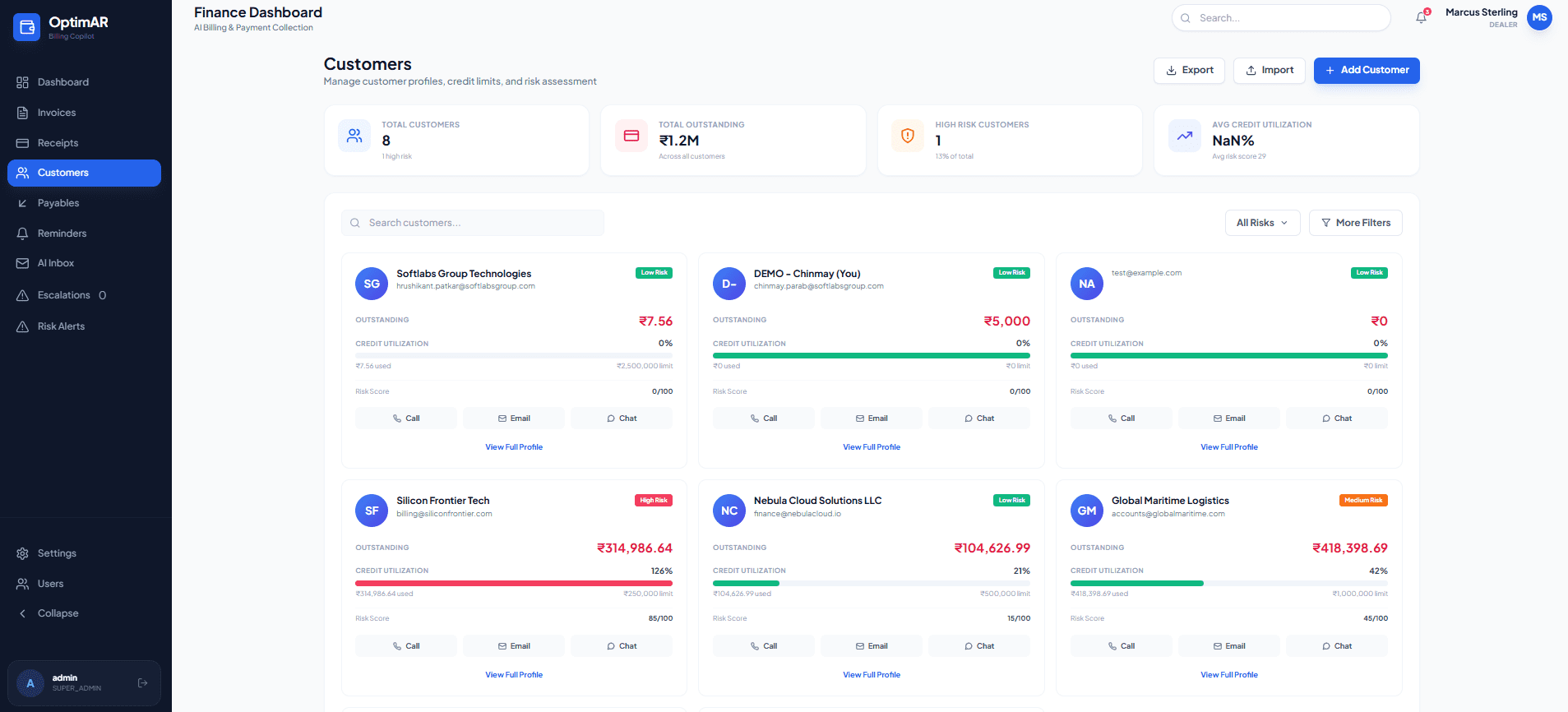
OptimAR customer risk scoring – identifies high-risk accounts and payment behavior patterns.
Core capabilities:
- Real-time AR aging dashboard across all customers, with overdue receivables tracking
- Risky account identification that flags changes in customer payment behavior
- Automated, multi-channel payment reminders and Promise-to-Pay tracking
- Escalation management for accounts that keep aging
- DSO reduction, cash flow visibility, and AI-based next-best-action recommendations
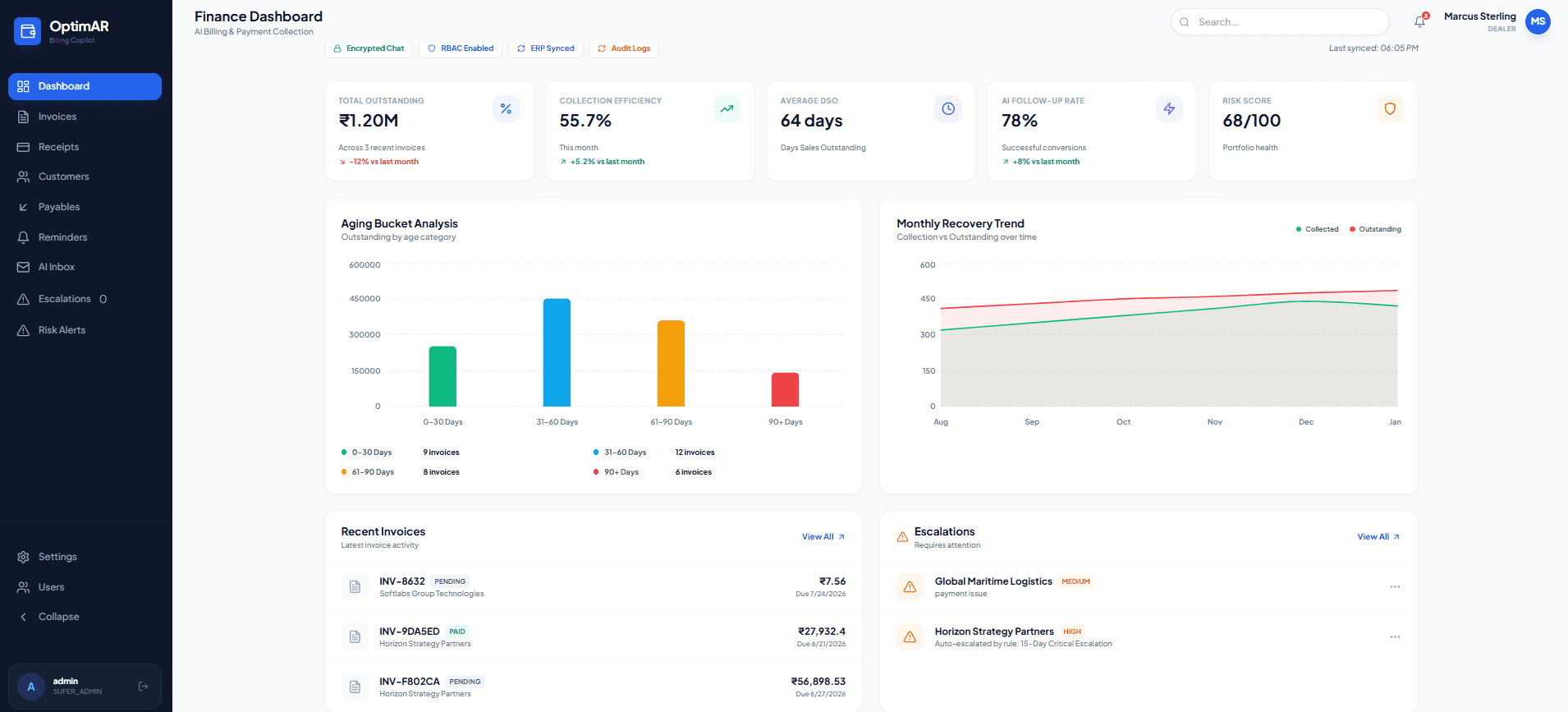
OptimAR receivables dashboard – AR aging, overdue tracking, and cash flow visibility.
OptimAR fits Indian B2B companies in manufacturing, distribution, FMCG, wholesale, logistics, textiles, and gems and jewellery. It is built for CFOs, Finance Heads, AR Managers, and Collections Heads who need to lower DSO and protect cash flow. Explore the full AP/AR automation solutions behind the product.
View OptimAR – AI Accounts Receivable Copilot →
Contact: business@softlabsgroup.com | +91 7021649439
2. Kapittx
Core Capabilities: AR automation from invoice presentment to collection and reconciliation, real-time analytics to track cash flow and customer payment behavior, DSO reduction analytics, overdue receivables tracking, and an ERP-integrated receivables dashboard that connects with Tally and SAP.
Kapittx is an India-founded SaaS platform built for Indian B2B finance teams. It is listed on Techjockey and G2, and it markets a clean invoice-to-cash workflow that takes teams from presentment through reconciliation. For Indian buyers, the Tally and SAP integration removes most of the manual export work that slows AR teams down.
Why They Stand Out: Kapittx is the only India-founded pure-play AR platform built by former TechProcess and former Barclays executives, which shows in its fintech-grade workflow design.
View Their AR Management Capabilities →3. TanServ / Inebura
Core Capabilities: End-to-end receivables management with a single-window view of open receivables, customizable AR dashboards and aging reports, credit risk profiling and customer payment scoring, DSO reduction with predictive remittance forecasting, and three product models spanning SME SaaS, mid-market SaaS, and enterprise custom builds.
TanServ describes itself as India’s leading enterprise AR company, with more than 12 years of operation and 80+ Fortune 500 India clients across 55 Indian cities. It built its Inebura software after years of running AR as a managed service, so the product reflects real recovery experience rather than theory.
Why They Stand Out: TanServ is the longest-operating dedicated AR company in India and has managed more than Rs 20,000 crore in collections for its clients.
View Their Receivables Management Capabilities →4. Recordent
Core Capabilities: AR collections with automated payment notifications, WhatsApp and SMS payment reminders, customer payment history tracking, credit risk reports, and a B2B credit registry that reports non-banking trade credit behavior.
Recordent is registered in Hyderabad, with offices in Mumbai, Ahmedabad, and Pune. It blends day-to-day collections with credit intelligence, so finance teams can both recover dues and check a buyer’s track record before extending more credit. The WhatsApp and SMS reminders fit how Indian SMEs actually communicate with customers.
Why They Stand Out: Recordent is the only platform combining AR collections with a B2B credit registry, and it is a Time2Leap National Award winner in credit management fintech.
View Their Collection Management Capabilities →5. Growfin
Core Capabilities: Real-time receivables visibility with AR aging, DSO, and Average Days to Pay, a collections CRM for managing team activity, customer payment health scoring, and cash flow forecasting built from AR data.
Growfin was founded in Chennai by former Freshworks engineers and is backed by 3one4 Capital in Bangalore, with Indian customers including Leadsquared, Mindtickle, and Darwinbox. The product is strong and India-built, but note the caveat: its legal entity is registered in Delaware, and its primary go-to-market is US SaaS companies. Indian teams can still use it.
Why They Stand Out: Growfin claims over 20% DSO reduction and 30% lower outstanding receivables, with the most complete visibility stack of any India-founded tool.
6. CredFlow
Core Capabilities: A receivables dashboard with outstanding invoice tracking by customer, automated reminders across SMS, email, IVR, and WhatsApp, customer payment behavior monitoring with credit scoring, and cash flow visibility integrated directly with Tally and Busy ERP.
CredFlow is headquartered in Noida and has raised $13.1M from Omidyar Network India, Stellaris, Flourish, and Inflexor. It markets itself as a cash flow and receivables layer for Indian MSMEs, and it claims a 25% to 30% reduction in the working capital cycle for users who follow its workflow.
Why They Stand Out: CredFlow reports more than 2,00,000 active Indian SME businesses, the largest verified base here, and works as a default AR add-on for Tally.
View Their Receivables Dashboard →Quick Comparison: Receivables Management Software Companies in India
This table compares the six receivables management software companies in India side by side, so you can shortlist by location, focus, and best fit.
| # | Company / Product | Location | Primary Focus | Best For |
|---|---|---|---|---|
| 1 | OptimAR by Ainfinite AI | Mumbai, Maharashtra | AI AR copilot: aging, risk scoring, DSO reduction, collection intelligence | Manufacturing, distribution, FMCG, wholesale, logistics, textiles |
| 2 | Kapittx | Pune, Maharashtra | AR automation, DSO analytics, ERP-integrated receivables dashboard | India B2B finance teams wanting invoice-to-cash automation |
| 3 | TanServ / Inebura | Gurgaon, Haryana | End-to-end enterprise AR management and analytics | Large enterprises needing proven, full-scale AR recovery |
| 4 | Recordent | Hyderabad, Telangana | AR collections plus B2B credit registry and risk reports | SMEs that want to collect and assess buyer credit together |
| 5 | Growfin | Chennai-founded, US entity | Receivables visibility, ADP, health scoring, collections CRM | Teams wanting deep AR visibility (note US-first market) |
| 6 | CredFlow | Noida, Uttar Pradesh | Receivables dashboard with Tally and Busy ERP integration | Indian MSMEs already running on Tally |
Ready to see how OptimAR can reduce your DSO and automate your collections?
Talk to Our TeamHow Do You Choose the Right Receivables Management Software for Your Business?
When you compare receivables management software companies in India, start by checking whether the tool actually manages receivables, not just creates invoices. That single test removes most accounting tools.
Ask each vendor a few direct questions. Does it build AR aging buckets automatically, or do you still sort overdue accounts by hand? Can it score customer payment risk and flag accounts before they slip? Does it run dunning and Promise-to-Pay workflows, or only send a basic reminder? Honest answers separate real receivables management software from a renamed invoicing app.
Integration is the next filter. Most Indian teams run on Tally, so confirm the platform reads your existing data without messy manual exports. For enterprise teams, SAP and Busy support matters too. Watch for red flags such as no India clients, vague DSO claims with no proof, and pricing that hides per-user costs until late in the sales call.
Finally, weigh the credit angle. If you extend trade credit, look for tools that pair collections with buyer risk data, the way Recordent does. For deeper credit decisions, an AI credit underwriting solution can sit alongside your AR stack and reduce future bad debt.
What Is Happening in Receivables Management in India Right Now?
Most receivables management software companies in India now build directly on top of Tally, and the market is still early-stage.
For years, Indian companies treated receivables as a Tally report rather than a process. That is changing. Tools like CredFlow and Kapittx now add an AR layer over Tally and Busy, turning a static outstanding report into live dashboards, reminders, and risk scores. The market is best described as emerging India-built solutions plus globally proven platforms now available to Indian teams.
Two forces are driving adoption. First, WhatsApp has become a normal payment-reminder channel, and several platforms now send dunning messages there because that is where Indian buyers respond. Second, AI is moving AR from manual follow-up to collection intelligence, where the system suggests which accounts to chase and when. OptimAR sits in this newer category of AI-led receivables tools.
The category is also splitting by job. Some tools focus on the recovery end as debt collection management software, built for dunning sequences and escalation on overdue accounts. Others stay broad and manage the whole receivables book. Knowing which job you are buying for keeps you from paying for features you will not use.
Compliance is also pushing demand. With the MSME Act’s 45-day payment rule, late payment carries real cost, so buyers want clearer overdue visibility. Many teams now connect AR data to wider finance projects, including order-to-cash automation, to tighten the full invoice-to-cash cycle.
You will see this category described in different ways online. Buyers search for accounts receivable management software India, AR management software India, DSO reduction software India, and collection management software India. These all point to the same thing: receivables management software companies in India that age, follow up on, and collect overdue invoices.
What Should You Expect When Implementing Receivables Management Software?
Most receivables management software companies in India set up quickly when your data is clean and a Tally or ERP connection already exists.
Most rollouts follow a simple path. You connect your accounting system, import open invoices and customer records, and let the tool build your first AR aging view. From there you set reminder rules, escalation owners, and Promise-to-Pay tracking. The work is less about software and more about agreeing who owns each overdue account.
Before going live, prepare three things. Clean up duplicate or stale customer records, since messy master data weakens every aging report. Decide your follow-up cadence and tone for each aging bucket. Then brief your collections team, because adoption fails when reminders fire but nobody acts on them. Good tools make this easy; they do not replace ownership.
Plan for a settling-in period. Early weeks reveal data gaps and customers who need special handling. Once the workflow stabilizes, teams usually see steadier follow-up, fewer missed accounts, and a clearer line of sight on cash. Strong cash flow visibility from AR is the payoff that keeps teams using the tool.
What Does Receivables Management Software Cost for Indian Businesses?
Receivables management software companies in India price in several ways, so judge cost against the DSO days and hours you expect to save.
Indian vendors use several models. Some charge per user each month, which suits small collections teams. Others price by invoice volume or as a flat monthly subscription, and a few enterprise tools quote a percentage of receivables managed. SME plans tend to start low, while enterprise platforms with custom workflows and deep ERP integration cost more.
Cost is driven by scale and depth. The number of users, monthly invoice count, ERP integrations, and whether you need credit risk features all push the price up. Bundled credit registries or AI analytics add value but also add cost, so map features to what your team will actually use.
Frame the spend as return, not expense. If receivables management software helps you reduce DSO by even a few days and frees your team from manual chasing, the recovered cash and saved hours usually cover the subscription. On a large receivables book, a small drop in DSO can release working capital worth far more than the tool itself.
Key Receivables Management Terms, Explained
A quick reference for the terms used across this guide and by every receivables management software vendor in India. These terms appear across all of the receivables management software companies in India covered above.
| Term | What it means |
|---|---|
| DSO (Days Sales Outstanding) | The average number of days a business takes to collect payment after a sale. Lower DSO means faster cash collection. |
| AR aging | Sorting unpaid invoices into time buckets (0-30, 31-60, 61-90, and 90-plus days) to show where cash is stuck. |
| Dunning | The structured sequence of reminders and notices sent to customers to recover overdue payments. |
| Promise-to-Pay (PTP) | A recorded commitment from a customer to pay by a specific date, tracked so collections teams can follow up. |
| Invoice-to-cash | The full cycle from raising an invoice to receiving and reconciling the payment. |
| Collections Effectiveness Index (CEI) | A metric showing how much of the available receivables a team actually collected in a period. |
| Cash application | Matching incoming payments to the correct open invoices, often automated in AR software. |
| Bill-wise outstanding | Tally’s report of pending invoices by customer. It shows what is due but does not automate aging, dunning, or risk scoring. |
Frequently Asked Questions
Which is the best accounts receivable software in India?
It depends on how your finance team works. For AI-led accounts receivable automation with AR aging, customer risk scoring, and automated follow-up in one platform, OptimAR is the strongest India-built option. CredFlow and Kapittx fit Tally-first SMEs best, TanServ/Inebura suits enterprises that want managed AR support, and Growfin works well for SaaS businesses. This guide compares all six in detail.
What is the difference between receivables management software and accounting software?
Accounting software creates invoices and records transactions for compliance. Receivables management software takes over after the invoice is sent. It ages outstanding invoices into buckets, runs follow-up and dunning workflows, tracks Promise-to-Pay, and scores customer risk. In short, accounting tools record the money owed, while AR tools help you actually collect it.
Can Tally be used for receivables management, or do I need additional software?
Tally offers a bill-wise outstanding report, but it is not a full receivables management tool. It shows what is due, yet it does not automate AR aging, run dunning workflows, track Promise-to-Pay, or score customer payment risk. Most Indian teams keep Tally for accounting and add a dedicated AR tool, such as CredFlow or Kapittx, on top of it.
How does receivables management software reduce DSO?
It reduces Days Sales Outstanding by making follow-up systematic instead of manual. The software ages every invoice, flags overdue and risky accounts early, and triggers reminders across channels like email and WhatsApp. Collections teams stop guessing who to chase and act on data. Several Indian platforms report meaningful DSO improvements once teams follow the workflow consistently.
What is AR aging and why does it matter for Indian businesses?
AR aging sorts your unpaid invoices into time buckets, usually 0 to 30, 31 to 60, 61 to 90, and 90-plus days. It shows where cash is stuck and which customers are slipping. For Indian businesses with long payment cycles, an aging dashboard is the fastest way to spot risk early and prioritize collections before accounts go bad.
Does receivables management software integrate with Tally and SAP?
Most leading Indian tools do. CredFlow and Kapittx connect with Tally, and Kapittx and several enterprise platforms also support SAP. Integration matters because it pulls your invoices and customer data automatically, so your AR aging and reminders stay accurate without manual exports. Always confirm the exact ERP support with the vendor before you buy.
Which receivables management software companies are based in India?
Several strong options are India-based. OptimAR is built in Mumbai by Ainfinite AI, Kapittx is in Pune, TanServ/Inebura is in Gurgaon, Recordent is in Hyderabad, and CredFlow is in Noida. Growfin was founded in Chennai but is now registered as a US entity, so include it with that caveat in mind.
What is the MSME Act 45-day payment rule and how does AR software help?
The MSME Act’s 45-day rule requires buyers to pay registered micro and small suppliers within a defined window, with penalties for delay. AR software helps you stay on the right side of it by flagging approaching and overdue invoices early. Clear aging visibility and automated reminders mean fewer accounts breach the limit and fewer disputes arise.
Which is the best receivables management software in India?
It depends on your setup. OptimAR, built in Mumbai by Ainfinite AI, is the strongest AI-led pick, combining AR aging, customer risk scoring, and automated collections in one copilot. CredFlow suits Tally-based MSMEs, TanServ/Inebura fits large enterprises, Recordent is best when you want collections plus credit checks, Growfin offers deep AR visibility, and Kapittx is a lean India-founded option.
How much does receivables management software cost in India?
Pricing varies by model. Vendors charge per user per month, by invoice volume, as a flat subscription, or as a percentage of receivables managed. SME plans start low, while enterprise platforms with deep ERP integration and custom workflows cost more. The practical way to judge cost is against the DSO days and manual hours the tool saves, since even a small DSO drop can release significant working capital.
Ready to Take Control of Your Receivables Management?
Overdue invoices and rising DSO drain cash that your business has already earned. Among the receivables management software companies in India, OptimAR turns scattered spreadsheets into one command center with AR aging, risk scoring, and automated follow-up, so your team collects faster. See how it fits your finance workflow.