India
India  Mongolia
  Sweden
  Australia
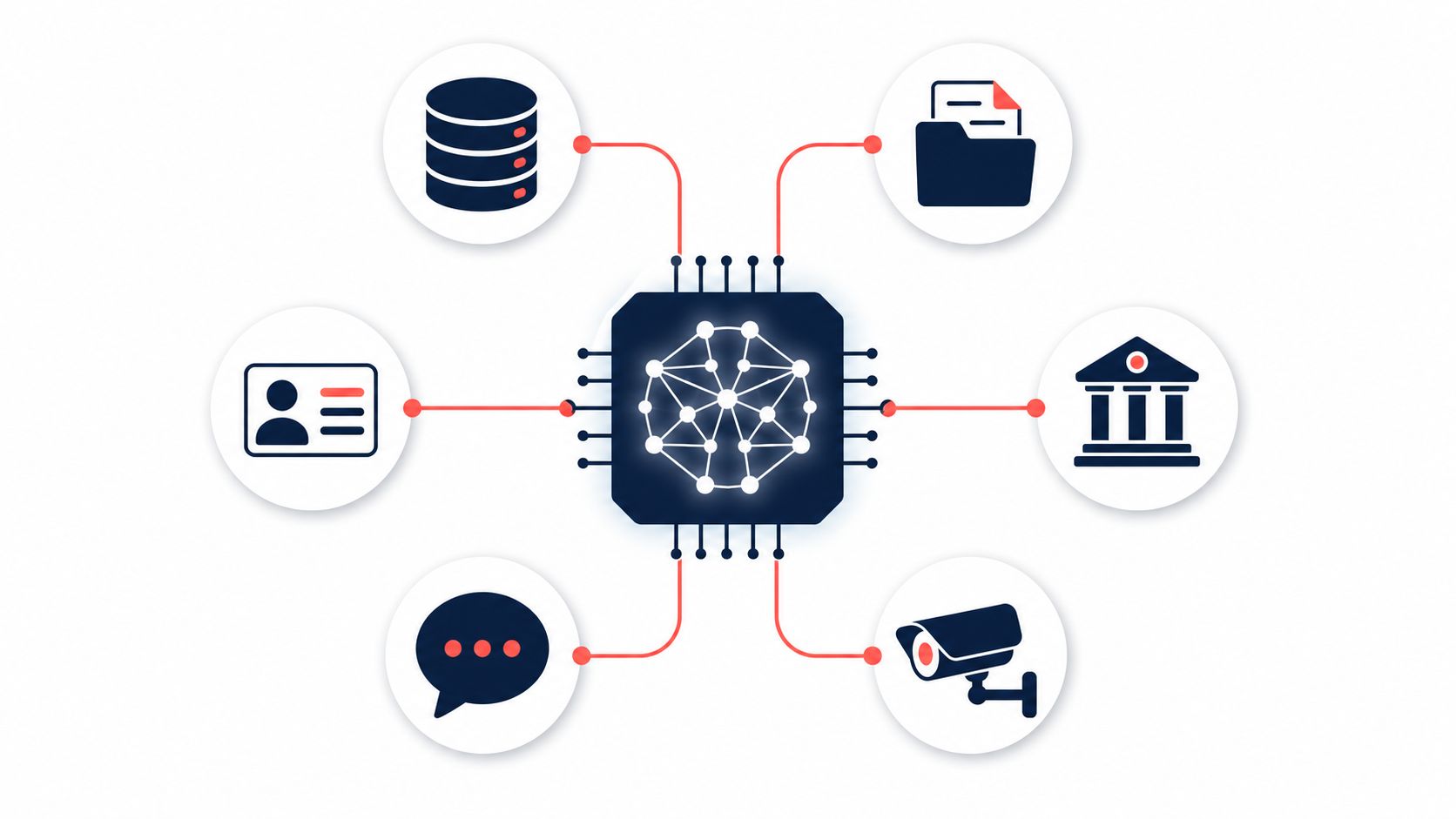
This guide compares the top software consulting firms for AI integration in 2026, honestly, by tier, capability, and cost. Software consulting firms for AI integration do one specific, difficult job: because their job is connecting AI models to the systems your business already runs on, your ERP, CRM, documents, finance stack, and legacy software, so the AI works inside real operations instead of in a demo. AI integration is a different discipline from AI strategy consulting, and it is where most AI projects succeed or die.
Quick answer: The top software consulting firms for AI integration in 2026 are Accenture, IBM Consulting, Deloitte, TCS, and Infosys at enterprise scale; LeewayHertz, Fractal, N-iX, Hexaware, and Addepto for specialized engineering; and Softlabs Group, our star pick for mid-market buyers, with live production AI integrations across Tally, SAP, and Zoho Books environments and rates from $8/hr. This guide compares all of them honestly: what each is best at, when each is the wrong choice, and what AI integration actually costs.
Who wrote this, how firms were scored, and one disclosure
This guide is written by Softlabs Group, a software and AI development company operating since 2003 from Mumbai. We build AI integrations for a living, which is exactly why you should read this with the disclosure in plain sight: Softlabs Group appears in this list. We applied the same criteria to our own entry as to every other firm, and we encourage you to verify us the same way. The scoring criteria: evidence of AI connected to real business systems in production, not demos; published integration capability per system category; post-launch ownership and monitoring; and rates or engagement sizes where publicly available. Firms whose public evidence is strategy content without deployment proof did not make the list, however famous. As a result, the top software consulting firms for AI integration in 2026 listed here all carry checkable delivery evidence.
On this page
What an AI integration firm actually does
Where companies actually integrate AI
The five integration patterns
Comparison table
Our star pick: Softlabs Group
Enterprise and strategic firms
Technical and specialized firms
What AI integration costs
Why AI integration projects fail
Seven questions that expose a firm in one call
FAQ
What Software Consulting Firms for AI Integration Actually Do
One note on words first: buyers search this market as AI integration companies, AI implementation companies, AI consulting firms, or software consulting firms for AI integration. In other words, the names differ; the discipline is the same, and this guide covers it under all of them.
The market blurs three different services under one label, and buyers pay for the confusion. The best software consulting firms for AI integration are fluent in all three. Strategy consulting tells you where AI could create value; it ends in a roadmap. AI development builds models and applications; it can end in something that works brilliantly in isolation. AI integration is the third discipline: making the model read from and write to the systems your business already trusts, with authentication, permissions, error handling, and monitoring that survive contact with production. When people search for software consulting firms for AI integration, this third discipline is what they need, whether they phrase it that way or not.
Where Companies Actually Integrate AI in 2026
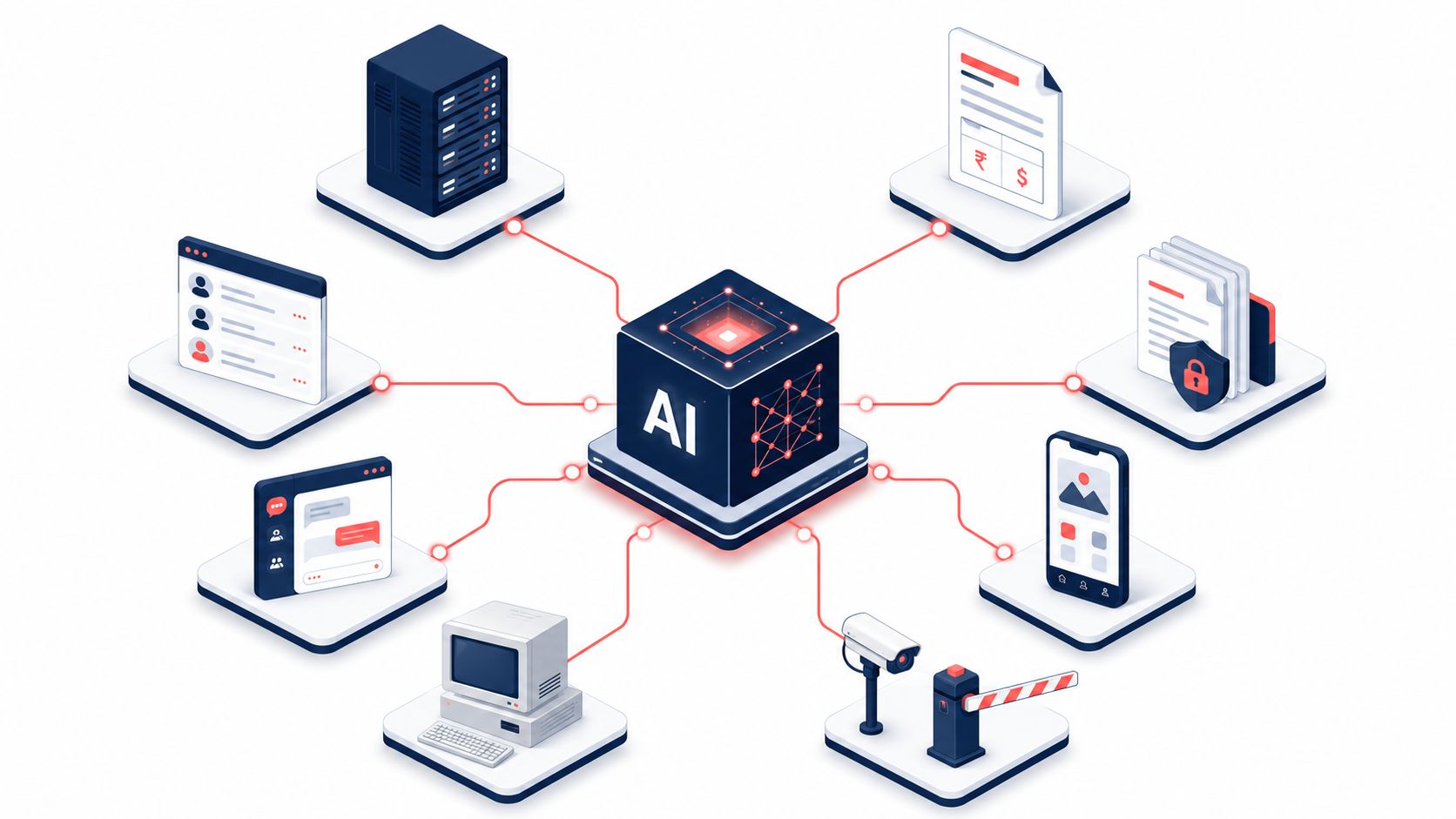
AI integration is abstract until you name the system. Because every buyer searching this phrase has a specific surface in mind, and the right firm differs by surface. This map is the fastest way to turn a vague AI ambition into a scoped project.
| Integration surface | What buyers want | The proof that matters in a vendor |
|---|---|---|
| ERP systems (SAP, Oracle, Tally, Odoo, Dynamics) | AI that reads and writes orders, invoices, inventory, and ledgers | A connector the firm has already shipped into that ERP family, not a promise to build one |
| Finance and accounting stacks | Collections, accounts payable and receivable, reconciliation automation | A live product or deployment, with named systems it connects to |
| CRM (Salesforce, Zoho, HubSpot) | Lead scoring, drafting, next-action agents inside the CRM | API scopes and permission handling demonstrated, not described |
| Document estates (SharePoint, Drive, Confluence) | Ask-your-documents AI with access control intact | Permission mirroring: the AI shows each user only what that user could already see. This detail separates enterprise-grade from toy |
| Communication tools (Teams, Slack, email) | AI where work already happens, not another tab | Bots and webhook deployments running in production |
| Customer-facing products | AI features inside an existing app or platform | Shipped, checkable app-store or web proof |
| Legacy systems with no APIs | The hardest and often most valuable integration | RPA-plus-AI hybrid experience; ask how they handled a system with no API at all |
| Physical infrastructure (CCTV, machines, gates, devices) | AI acting on the physical world | Hardware integrations in production, the rarest capability on this list |
The Five Integration Patterns, in Buyer Language
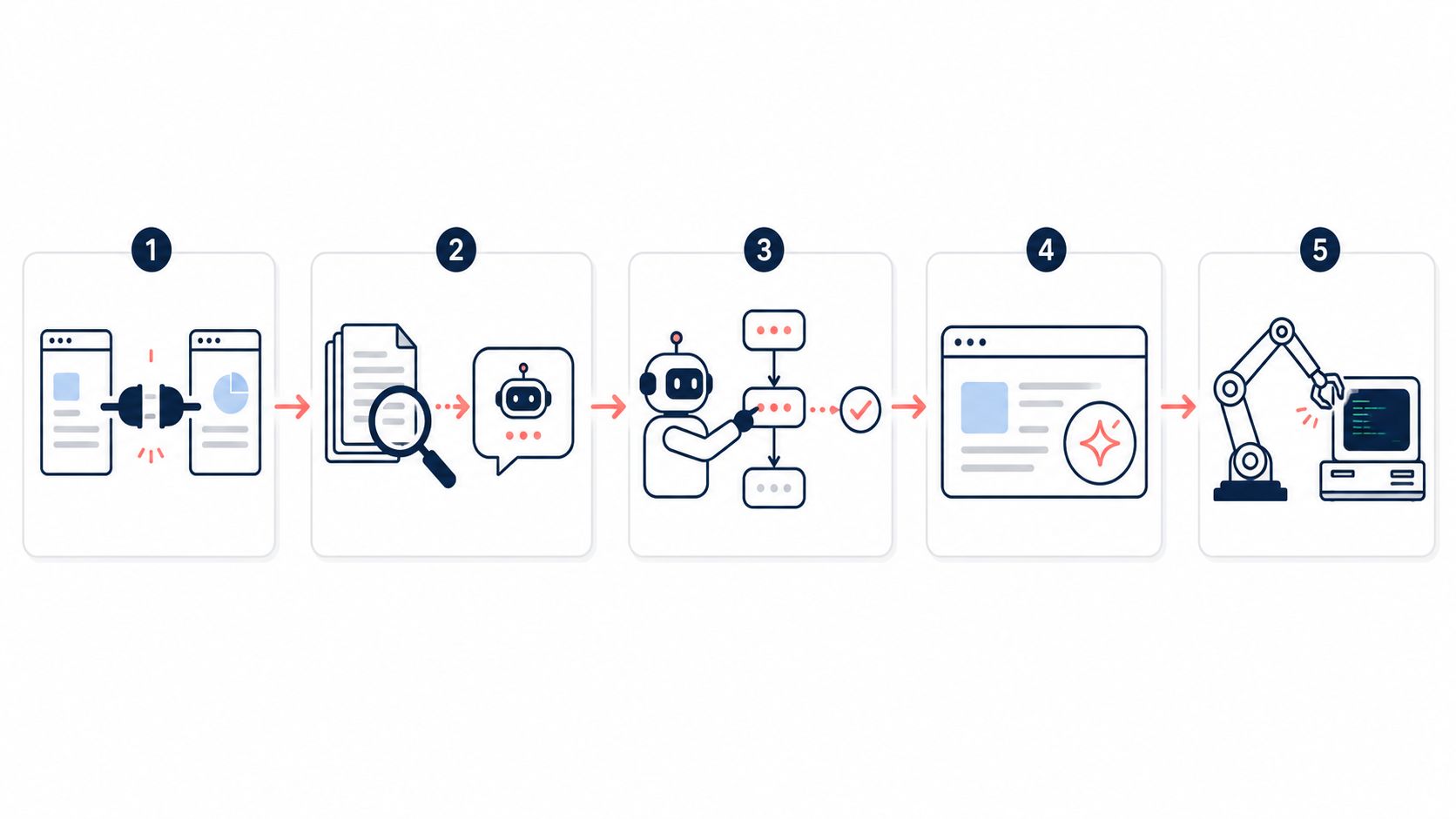
In practice, most real AI integration programs combine two or three of these patterns. Meanwhile, a firm that pushes one pattern for every problem is selling its comfort zone, not solving yours.
Top Software Consulting Firms for AI Integration in 2026: Comparison
First, the table below compares the top software consulting firms for AI integration in 2026 at a glance; the tiered profiles that follow add the honest fit notes.
| Firm | Tier | Best for | Integration strength | Rates |
|---|---|---|---|---|
| Softlabs Group ★ | Star pick | Mid-market buyers who need working integrations | Live AI product integrations across Tally, SAP, and Zoho Books; document-stack AI with permission mirroring; hardware integrations in production | $8 to $49/hr published |
| Accenture | Enterprise | Multi-country AI programs | Complex system integration at the largest scale; top-tier Microsoft, Google Cloud, and AWS partnerships | Enterprise budgets, typically six figures and up |
| IBM Consulting | Enterprise | Regulated industries | watsonx platform with governance and data security embedded in deployment; ISO 27001 | Enterprise budgets |
| Deloitte | Enterprise | Strategy-led transformation | Trustworthy AI framework; strongest when integration sits inside a multi-year program | Big Four pricing |
| TCS | Enterprise | Large-scale IT estates | Mumbai-headquartered giant; AI integrated into global IT operations it often already runs | Enterprise budgets |
| Infosys | Enterprise | Legacy modernization + AI | Topaz platform for merging AI rollouts with legacy IT and cloud modernization | Enterprise budgets |
| LeewayHertz | Specialized | GenAI application builds | Generative AI apps, LLM fine-tuning, cloud-native delivery | Mid-market |
| Fractal | Specialized | Decision intelligence at enterprise data scale | Deep analytics-to-AI pipelines for large data estates | Enterprise-leaning |
| N-iX | Specialized | Large engineering programs (Europe/NA) | Data platform architecture, ML pipelines, AI integration into enterprise applications | Mid-to-enterprise |
| Hexaware | Specialized | Banking, insurance, healthcare | AI embedded across complex multi-system environments; automation-first delivery | Enterprise-leaning |
| Addepto | Specialized | Production-grade ML and LLM work | Models, pipelines, and LLM implementation paired with integration engineering | Mid-market |
Softlabs Group: Our Star Pick Among the Top Software Consulting Firms for AI Integration in 2026
First, before the tiers, the pick, stated with the disclosure from our methodology box in full view: this is our own firm, scored by the same criteria as everyone else on this page, and we want you to verify it the same way. The reason Softlabs Group is the star pick on a page that includes Accenture and IBM is fit, not size. Most readers of this guide are mid-market buyers with one or two integration surfaces and a budget the Tier 1 firms’ engagement minimums quietly exclude. For that reader comparing the top software consulting firms for AI integration in 2026, the questions that matter are the seven at the bottom of this page, and this is the firm on the list that answers all seven with shipped, checkable proof, at India delivery economics where a scoped proof of value costs less than a Tier 1 discovery workshop. For the wider Indian market beyond this page, our separate guide to artificial intelligence companies in India covers it in depth.
Softlabs Group
Lower Parel, Mumbai · Software and AI development since 2003
AI integration is where AI projects die, because it demands two kinds of knowledge at once: the new models, and the old systems they must plug into. However, most AI firms know the first and improvise the second. Softlabs Group spent 23 years building the ERPs, finance systems, and enterprise software that AI now has to integrate with, before adding the AI. That order matters, and it shows below.
→ Fine-tuned models: LoRA and QLoRA adaptation on client data
→ Vision models: YOLO-family detection tuned per deployment
→ Commercial model APIs where the use case fits them
→ Agentic AI with tool access and human approval gates
→ Served with vLLM, measured with RAGAS evaluation pipelines
→ Document estates: Google Drive, Confluence, SharePoint, Slack, Teams
→ Backends and payments: Azure, AWS, Firebase, Stripe, GraphQL APIs
→ Physical infrastructure: CCTV, boom barriers, wearable sensors
→ Legacy systems with no APIs, through RPA-AI hybrid patterns
Why the connecting part is home turf, not a new trick:
- 23 years of building the other side: before AI, Softlabs built and integrated the ERPs, finance systems, portals, and mobile backends themselves. Connecting systems across whatever technology each decade brought, payment gateways, SOAP then REST APIs, cloud migrations, mobile SDKs, is the firm’s oldest habit; AI is the newest thing being connected, not the first.
- Integration-first products: OptimAR was designed around integration as the premise, an AI product is only useful if it reads the ledgers where they already live.
- Permission mirroring as standard: the enterprise-grade access detail from the surfaces table above ships by default in Ainfinite Core, not as a custom extra.
- Your infrastructure, your data: deployments run in the client’s own cloud or on-premise, so prompts, embeddings, and logs never leave systems you control.
- Breakage is planned for: maintenance contracts cover the day your ERP updates and the connector needs fixing, because that day always comes.
The proof, mapped to the integration surfaces above, every item checkable:
The seven vendor questions from this guide, answered in advance:
- 1. Shipped connectors in your category? Yes: ERP and accounting (Tally, SAP, Zoho Books), documents, backends, and hardware, all named above and checkable.
- 2. Authentication and permissions? Permission mirroring demonstrated in Ainfinite Core; users see only what their existing access allows.
- 3. Where do data, prompts, and logs live? In your infrastructure: client cloud or on-premise deployment is the default offer, not a special request.
- 4. What happens when your system updates and breaks the integration? Covered in maintenance terms, in writing.
- 5. Who owns the code and middleware? You do; full IP transfer is standard at onboarding.
- 6. Reference architecture from past work? Available on request, redacted where client confidentiality requires.
- 7. What is monitored in month six? Post-launch monitoring is a standard engagement phase, not an upsell: accuracy, drift, cost, and failure handling.
In practice, engagements start with a scoped integration, typically one surface, one workflow, priced at India delivery rates from $8/hr, which means a proof of value here costs less than a discovery workshop at a Tier 1 firm.
Tier 1: Enterprise and Strategic Firms
Among the top software consulting firms for AI integration in 2026, these are the ones the market defaults to, and for genuinely enterprise-scale programs, the default is often right. Each entry includes the honest note most lists omit: when this firm is the wrong choice.
Accenture
Global consulting and technology services
Accenture is the firm to beat for AI integration at global scale. Therefore, if your AI program touches twenty systems in eight countries, this is the shortlist’s first name.
- Platform ecosystem: Top-tier alliance partnerships with Microsoft, Google Cloud, and AWS, validated by public joint announcements, which smooths platform-level integration approvals that stall smaller vendors
- Where it integrates: Generative AI advisory, data-platform integration, and intelligent customer experience across enterprise estates in 120+ countries
- Proof in production: Its Applied Intelligence division exists specifically to translate AI strategy into live production systems at enterprise scale; ranked #1 globally for AI and GenAI consulting by Consultancy.org
- Scale signal: One of the world’s largest AI implementation partners, with multi-geography transformation programs as the standard engagement shape
When it is the wrong choice: However, minimum engagement sizes and enterprise pricing make it a mismatch for mid-market buyers, and smaller clients report the risk of being served primarily by junior teams. If your project is one integration, not a transformation program, look downlist.
IBM Consulting
Enterprise AI with the watsonx platform
IBM’s proposition is integration with governance welded on: AI delivered into regulated environments with security, explainability, and compliance treated as deployment requirements rather than afterthoughts.
- Platform ecosystem: watsonx as the integration backbone, combining consulting and infrastructure under one vendor, paired with IBM’s hybrid cloud for estates that span on-premise and cloud
- Systems it reaches: Fraud detection, intelligent document processing, NLP applications, and LLM fine-tuning wired into banking, government, and healthcare systems
- Delivery proof: The AI Garage program takes clients from design-thinking workshop to deployed use case with ModelOps pipelines; ISO 27001 certified; 150,000+ consulting workforce
- Governance depth: Embedded governance and data security in deployment is the differentiator, built for organizations where regulators read the architecture diagrams
When it is the wrong choice: Still, the platform-led model pulls engagements toward the IBM ecosystem. If you want a vendor-neutral architecture across open-weight models and multiple clouds, ask hard questions before signing.
Deloitte
Strategy-led AI transformation
Deloitte runs one of the most complete AI consulting practices, strongest when AI integration is one stream inside a multi-year transformation with board attention and regulatory stakes.
- Governance framework: The Trustworthy AI framework, a seven-dimension model covering privacy, transparency, fairness, responsibility, accountability, robustness, and safety, applied to every integration decision
- Where it integrates: Financial services, healthcare, and public sector estates where AI must deploy inside strict ethical and compliance boundaries
- Evidence: Its annual State of AI in the Enterprise research tracks exactly the transition this guide is about: organizations moving from pilots to scaled production deployments
- Engagement shape: Multi-year transformation programs; the firm’s own research acknowledges many organizations remain stuck in pilot mode, which is the problem its long-cycle model is built to solve
When it is the wrong choice: Even so, Big Four pricing and large team structures create friction on short-cycle projects. Deloitte itself observes that many organizations remain stuck in pilot mode; a firm optimized for multi-year programs is not the cure for a company that needs one integration shipped this quarter.
TCS
Mumbai-headquartered global IT giant
TCS brings a specific integration advantage: it already runs the IT operations of many of the world’s largest companies, so integrating AI into estates it manages is home turf.
- Structural advantage: When the firm integrating AI is the firm already operating your IT estate, the discovery phase that costs competitors months is largely pre-done
- Typical estates: Large-scale enterprise transformation and global IT operations, with particular strength for India-region enterprises and existing TCS clients
- Scale signal: Mumbai-headquartered and India’s largest IT services company, with delivery capacity no boutique can match
- Best entry point: Enterprises with an existing TCS relationship get the lowest-friction AI integration path on this page; new mid-market buyers face enterprise procurement
When it is the wrong choice: However, engagement structures are built for enterprise IT procurement. Mid-market companies without an existing relationship will find faster, cheaper starts elsewhere on this list.
Infosys
Legacy modernization plus AI, via Topaz
Infosys is strongest where AI integration and legacy modernization are the same project. So if your integration problem is really a modernization problem wearing an AI hat, Infosys speaks both languages.
- Platform ecosystem: The Topaz AI platform, built specifically for merging AI rollouts with legacy IT and cloud modernization, the combination most enterprise estates actually need
- Where it integrates: Decades-old enterprise systems, cloud migrations in flight, and the hybrid estates in between
- Proof in production: Highly recommended in market analyses precisely for the legacy-plus-AI combination, the hardest integration surface in the table above
- Best entry point: Enterprises whose AI ambitions are blocked by old systems; the modernization and the integration become one program instead of two
When it is the wrong choice: Likewise, the same enterprise-procurement reality as its Tier 1 peers. A scoped, single-surface integration does not need a modernization giant.
Just Read Why the Giants Might Be Wrong for You?
That is the most common outcome of this research: the enterprise firms are excellent and mismatched. Softlabs Group builds production AI integrations for mid-market companies, ERP, finance stacks, documents, and hardware, at India delivery economics, with the proof linked below in our profile.
See the Softlabs AI Development PracticeTier 2: Technical and Specialized Engineering Firms
The software consulting firms for AI integration in this tier trade the giants’ scale for engineering depth and faster motion. For a defined integration with real technical difficulty, this tier often outperforms Tier 1 on both speed and cost.
LeewayHertz
Generative AI application development
LeewayHertz is a generative AI application specialist with genuine build depth rather than advisory gloss.
- What it integrates: Recommendation engines, demand forecasting models, and domain-specific chat interfaces integrated across supply chain, finance, and retail systems
- Technical depth: Fine-tunes open-source LLMs such as LLaMA and Mistral and delivers them as cloud-native services on microservice architectures with CI/CD pipelines, which makes iteration and redeployment fast
- Heritage: Product development roots with blockchain integration experience, useful when the AI must live inside a larger engineered system
- Best fit: Funded startups and mid-sized companies that need technical AI builds integrated into products, not strategy decks
Fractal
Decision intelligence for enterprise data estates
Fractal integrates AI where the asset is data at enterprise scale: analytics-to-AI pipelines, decision intelligence, and production ML for large organizations.
- Where it integrates: Enterprise data estates: warehouses, analytics platforms, and the decision workflows built on them
- Integration approach: Decision intelligence rather than point AI features: models integrated into how the organization actually decides, priced and structured for enterprises
- Scale signal: One of India’s AI heavyweights, Fortune 500 client base, and an IPO filed in late 2025, public-market scrutiny is its own form of verification
- Honest fit note: Best with substantial data assets and a clear decision-intelligence use case; mid-market buyers wanting a hands-on collaborative build partner may find the enterprise-first model heavy
N-iX
Large-scale engineering, Europe and North America
N-iX brings genuinely large engineering capacity to AI work, the kind that carries complex integrations rather than prototypes.
- Systems it reaches: AI integrated into enterprise applications on top of data platform architecture and ML pipelines built by the same team
- Delivery proof: Delivered complex AI programs for enterprises in telecom, financial services, and healthcare across Europe and North America
- Structural strength: Data engineering first: when the pipeline feeding the model is half the project, having platform architects in-house prevents the classic handoff failure
- Best fit: European and North American enterprises whose AI integration sits inside serious data engineering work
Hexaware
Multi-system enterprise AI, automation-first
Hexaware embeds AI across complex, multi-system environments, exactly the estates where integration is the whole difficulty.
- Typical estates: Multi-system enterprise environments in banking, insurance, and healthcare, where compliance shapes every integration decision
- Technical depth: Machine learning operations, conversational AI, intelligent document processing, and cloud-native AI deployment as an integrated practice
- Delivery model: Automation-first: the firm automates its own delivery work, which shows up as consistency across large multi-system programs
- Honest fit note: Built for enterprises with mature infrastructure and dedicated AI budgets; teams wanting fast iteration and close collaboration may find the engagement model structured
Addepto
Production-grade ML and LLM implementation
Addepto pairs AI and data depth with production-grade engineering, and it publishes its evaluation thinking, which this guide treats as a top-tier trust signal.
- What it integrates: Models, data pipelines, and LLM implementation integrated with production engineering, spanning generative AI, agentic systems, computer vision, and NLP
- Integration tooling: Proprietary products including ContextClue, an AI knowledge assistant, and ContextCheck, an open-source RAG evaluation framework, a firm that open-sources its evals is showing you its homework
- Recognition: Recognized by Forbes, Deloitte, and the Financial Times for moving organizations from experimentation to measurable outcomes; now part of KMS Technology
- Best fit: Companies that want their AI integration built by a team whose quality process is public and checkable
What AI Integration Consulting Costs in 2026
Pricing across the top software consulting firms for AI integration in 2026 splits by work stream, and budgets behave very differently at each tier.
| Work stream | Typical range | What you get |
|---|---|---|
| Discovery and scoping | $10,000 to $50,000 at most firms | Use-case selection, data and systems audit, architecture recommendation |
| Typical full project | Around $120,000 and close to 10 months on average, per Clutch market data | A production integration with deployment and initial support |
| Enterprise production hardening | $150,000 to $500,000 at US firms | Security review, governance, monitoring, scale engineering |
| Star pick equivalent (India delivery) | A fraction of the above at $8 to $49/hr rates | The same integration patterns; Softlabs scopes single-surface proofs of value that cost less than a Tier 1 discovery workshop |
The market behind these numbers is expanding fast: industry projections put AI consulting at $14.1 billion in 2026, headed beyond $116 billion by 2035. Therefore, prices will not fall while demand looks like that; scoping discipline is how you control cost.
Why AI Integration Projects Fail, Honestly
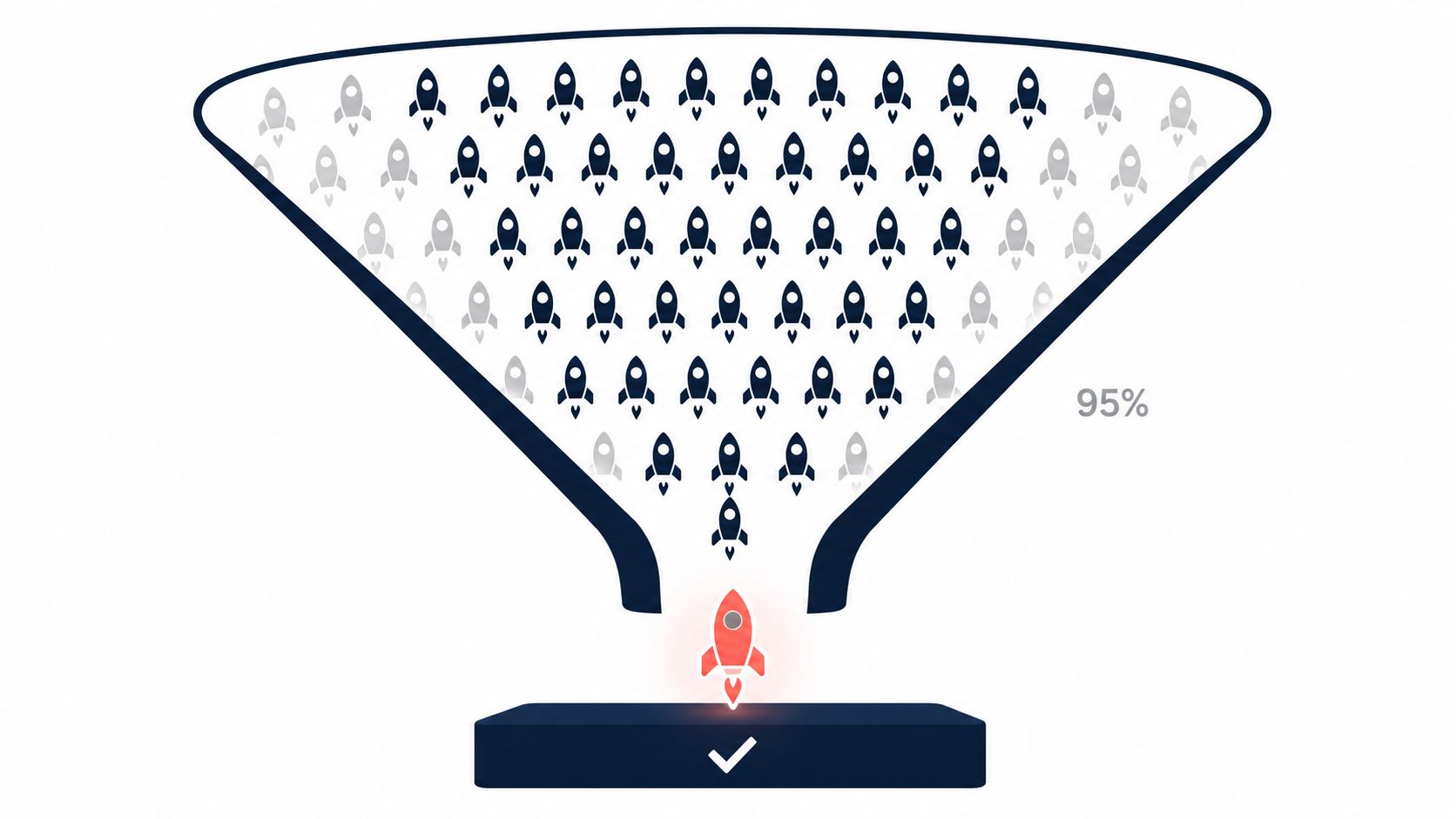
MIT’s State of AI in Business research reported a number that should be pinned above every AI budget: about 95% of enterprise generative AI pilots fail to reach production impact. Yet the failures are almost never the model. They happen at the seams this guide keeps pointing at: integrations that were demos, data pipelines nobody owned, permissions bolted on late, no monitoring after launch, and no person accountable when the ERP updated and the connector silently broke. Consequently, what separates the top software consulting firms for AI integration in 2026 from the rest is boring: a firm that treats integration as an engineering discipline with artifacts, reference architecture, dependency maps, evaluation reports, AI governance documentation, runbooks, rather than a demo with a contract attached. It is also why agentic AI deployments raise the bar further: an agent that acts inside your systems fails louder than a chatbot that answers badly.
Meanwhile, there is also a case for hiring nobody: if your team has engineering capacity, a defined single-surface use case, and time to learn, building in-house is legitimate, and a good consulting firm will tell you so. We cover that decision separately; the short version is that firms earn their fee on integration complexity, compliance stakes, and speed, not on tasks your own team could ship in a sprint.
Seven Questions That Expose an AI Integration Firm in One Call
Shortlisting the top software consulting firms for AI integration in 2026 is the easy half. These seven questions, asked on the first call, do the real filtering; the top AI integration companies answer all seven without flinching.
Frequently Asked Questions
Which are the best software consulting firms for AI integration in 2026?
The best software consulting firms for AI integration in 2026 are Accenture, IBM Consulting, Deloitte, TCS, and Infosys for enterprise-scale programs; LeewayHertz, Fractal, N-iX, Hexaware, and Addepto for specialized engineering; and Softlabs Group as the leading India-based choice for mid-market buyers, with live production integrations across finance systems, document platforms, and physical infrastructure at rates from $8/hr.
Where can I find a reliable list of software consulting firms for AI integration in 2026?
This guide is that list, with a methodology you can check: every firm was scored on evidence of AI connected to real business systems in production, published integration capability per system category, post-launch ownership, and available pricing. Treat any list, including this one, as a starting shortlist, then apply the seven vendor questions in this guide before signing anything.
What is the difference between AI consulting and AI integration?
AI consulting in the broad sense covers strategy: where AI could create value, and what to build. AI integration is the implementation discipline: connecting models to your ERP, CRM, documents, finance stack, or hardware with authentication, permissions, error handling, and monitoring that survive production. Most failed AI projects had adequate strategy and inadequate integration.
How much does AI integration consulting cost?
Discovery and scoping typically runs $10,000 to $50,000 at most firms, full projects average around $120,000 over roughly 10 months per Clutch market data, and enterprise production hardening reaches $150,000 to $500,000 at US firms. India delivery firms like Softlabs Group deliver the same integration patterns at $8 to $49 per hour, which puts a scoped single-surface proof of value below the cost of a Tier 1 discovery workshop.
Should I choose a global giant or a specialized firm for AI integration?
Match the firm to the program, not the brand. Multi-country, multi-system transformation with regulatory stakes: Tier 1 giants earn their pricing. A defined integration on one or two surfaces: specialized and India delivery firms move faster and cost a fraction. The most expensive mistake is hiring a transformation giant for a single-integration problem, and the giants’ own engagement minimums quietly agree.
What should an AI integration engagement deliver besides working software?
Written artifacts at every stage: a reference architecture and integration guide with API endpoints and dependency maps, an evaluation report measuring accuracy on your data, a security and permissions design, runbooks for operations, and monitoring with named ownership after launch. A firm that delivers software without these documents has handed you a system nobody can maintain.
Can AI be integrated with legacy systems that have no APIs?
Yes, through RPA-AI hybrid patterns: robotic process automation operates the legacy interface as hands while AI provides the decision layer as the brain. It is the most fragile integration pattern, breakage when the legacy UI changes is a design consideration, not a surprise, so maintenance terms matter more here than anywhere else.
Are Indian firms good for AI integration work?
Two of the five enterprise-tier firms in this guide, TCS and Infosys, are Indian giants, and Google’s own market summaries note India-based players stand out for embedding AI into existing IT infrastructures. For mid-market buyers, India delivery firms combine the same integration patterns with rates far below Western equivalents; the evaluation criteria do not change, so apply the same seven questions regardless of geography.
How long does an AI integration project take?
A scoped single-surface integration typically takes 6 to 12 weeks from kickoff to production, including evaluation on your data. Multi-surface programs run 4 to 10 months, consistent with the roughly 10-month average Clutch reports for full AI projects. Any firm promising a production integration in a week is describing a demo.
Wrapping Up
The honest summary of the AI integration and AI implementation market: the top software consulting firms for AI integration in 2026 are not one list but three tiers, the giants are excellent and frequently mismatched, the specialists are strong where your problem fits their pattern, and the highest-leverage decision for most mid-market buyers is a scoped, single-surface integration with a firm that can show shipped connectors, not slides. Use the surfaces table to name your system, the patterns to name your approach, the cost table to set your budget, and the seven questions to test every firm on your shortlist, including us.
Start With One Surface, Prove It, Then Scale
Softlabs Group scopes AI integrations the way this guide recommends: one system, one workflow, measurable in weeks, with your data staying in your infrastructure and every artifact handed over. Bring the system you want AI inside, and we will tell you honestly if it should be RAG, an agent, a copilot, or not AI at all.
Scope Your First Integration